Yellow-light benefits & research

590 nm Yellow Light Therapy

590 nm yellow light is an uncommon visible-light channel with growing human skin research. Studies have examined sensitive skin, redness, skin barrier function, melanin/complexion measures, sting response and photoaging-related outcomes such as wrinkles.

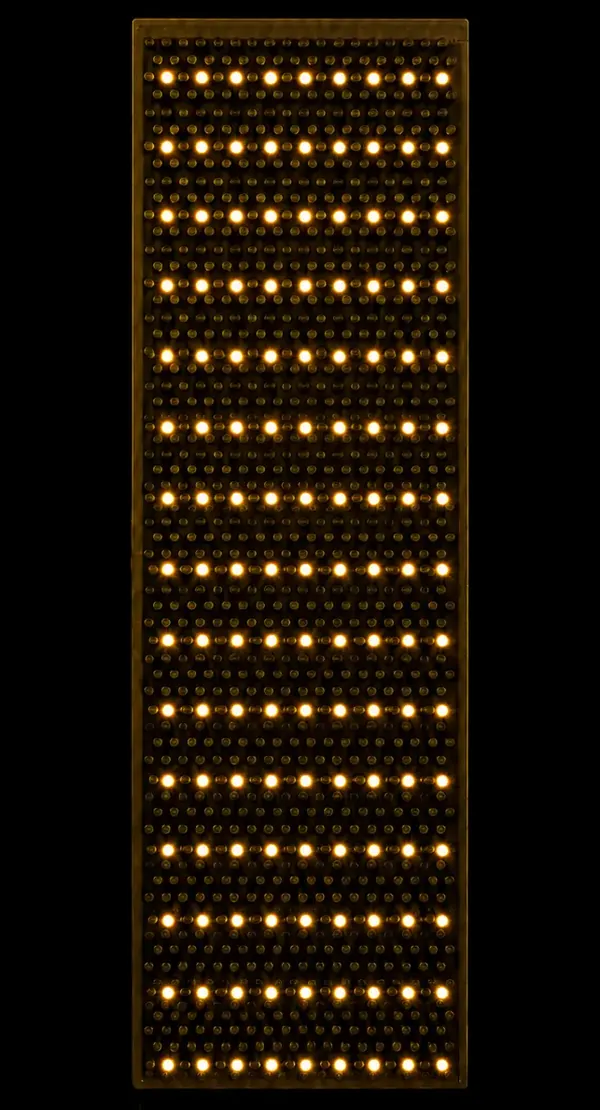
NrG Light Phoenix panel displaying the 590 nm yellow channel
Why yellow light?

What is 590 nm yellow light being studied for?

Yellow light occupies a skin-focused part of the visible spectrum and has been studied in both standalone and combination LED protocols.

Sensitive skin, redness & barrier function

Human research has examined 590 nm yellow light for sensitive-skin scores, erythema, transepidermal water loss, sting response and melanin index—measures related to visible redness, comfort and skin-barrier function.

Photoaging & complexion

Yellow-light protocols have also been studied for photoaging-related measures including wrinkles, texture and brown spots. Independent control lets the NrG yellow channel be used alone or combined with red and near-infrared light.

PBM wavelength basics →
Published research

Research areas for 590 nm yellow light.

Recent human studies make this one of the more interesting less-common visible channels for skin-focused photobiomodulation research.

Exact 590 nm · randomized human trialSensitive skin, redness & barrier function

A 2026 randomized controlled trial found that 590 nm yellow LED treatment improved sensitive-skin scores and significantly reduced erythema index, melanin index and transepidermal water loss while also improving sting-test response compared with control.

Exact 590 nm included · randomized human studyWrinkles & photoaging research

A randomized exploratory study using 590 nm yellow light together with red and near-infrared LEDs reported improvements in global photoaging and wrinkle scores after eight weeks. Because it was a combination protocol, the result reflects the full light combination rather than yellow light alone.

Exact 590 nm · laboratory researchCell-junction & barrier signaling

Laboratory research in human epithelial cells has examined exact 590 nm light for wavelength-dependent effects on cell morphology, signaling and tight-junction proteins—mechanisms relevant to how tissues maintain barrier structure.

Why 590 nm is a useful panel channel.

It adds an independently controlled yellow-light option with human research centered on sensitive skin, visible redness, barrier function and photoaging-related skin measures.

NrG Light panel availability

Which NrG Light panels include 590 nm?

Aura, Aurora and Phoenix use the full nine-channel NrG Light spectrum, and each channel can be independently adjusted from 0–100%.

Compact tabletop

NrG-AURA

Nine independently controlled wavelengths in a compact tabletop format.

View Aura →
Mid-size

NrG-AURORA

Nine-channel spectrum with broad coverage and flexible positioning.

View Aurora →
Full body

NrG-PHOENIX

Full-body coverage with nine independently controlled wavelength channels.

View Phoenix →

Research findings describe specific study protocols and should not be treated as guaranteed outcomes from a different device, dose, distance or schedule.

Questions

Frequently asked questions.

What is 590 nm yellow light being studied for?

Human research areas include sensitive skin, visible redness, skin-barrier function, melanin and complexion measures, sting response, wrinkles and photoaging-related skin changes.

What NrG Light panels include 590 nm?

NrG-AURA, NrG-AURORA and NrG-PHOENIX include an independently controlled 590 nm channel.

Why include yellow light in a red light therapy panel?

Yellow light adds a distinct skin-focused visible-light channel that can be used independently or combined with red and near-infrared light.

Can 590 nm be used by itself on NrG Light panels?

Yes. Aura, Aurora and Phoenix allow the 590 nm channel to be adjusted independently from the other wavelength channels.